Reflections on the Constitution
What various people thought of the Constitution


_455.jpg)
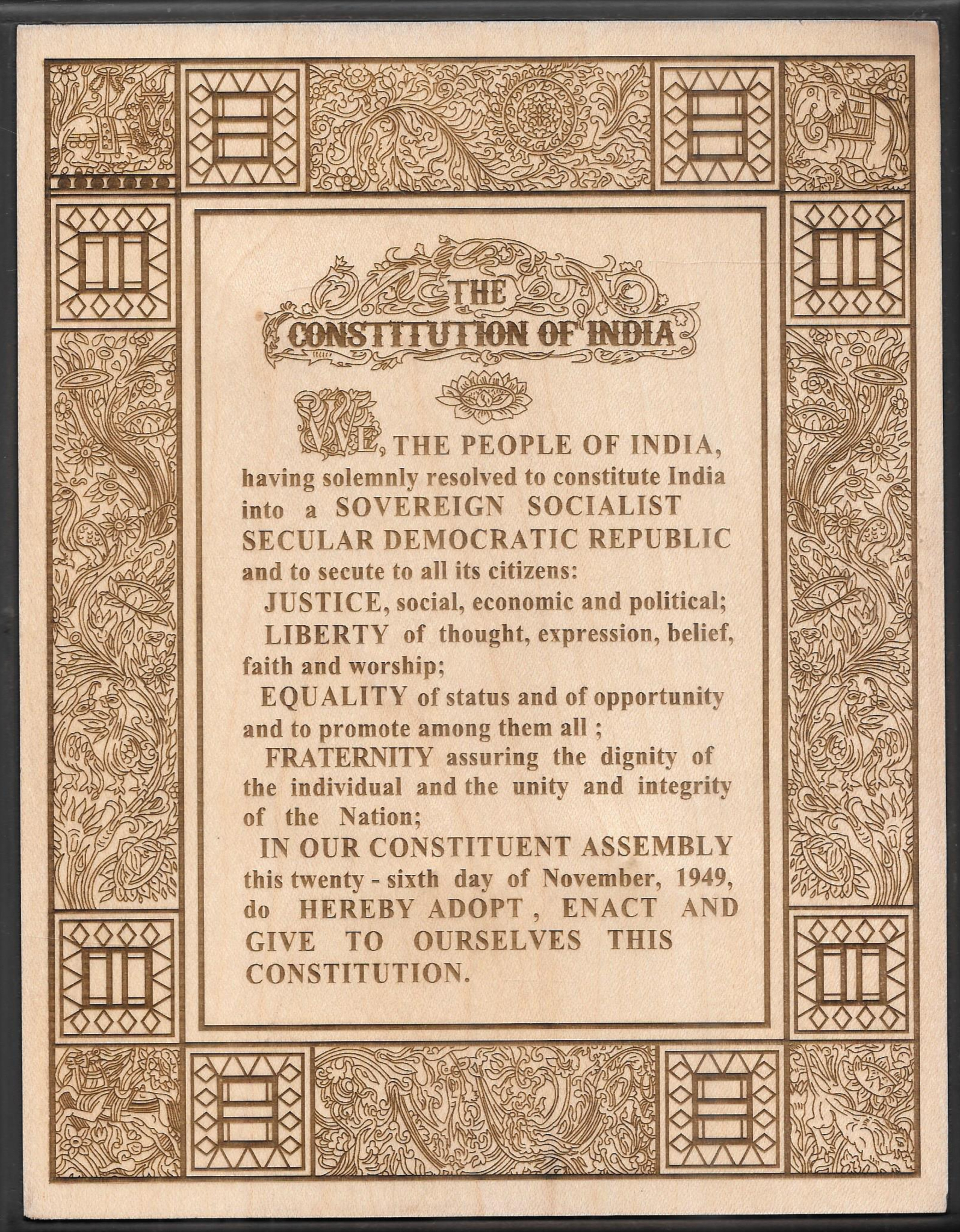
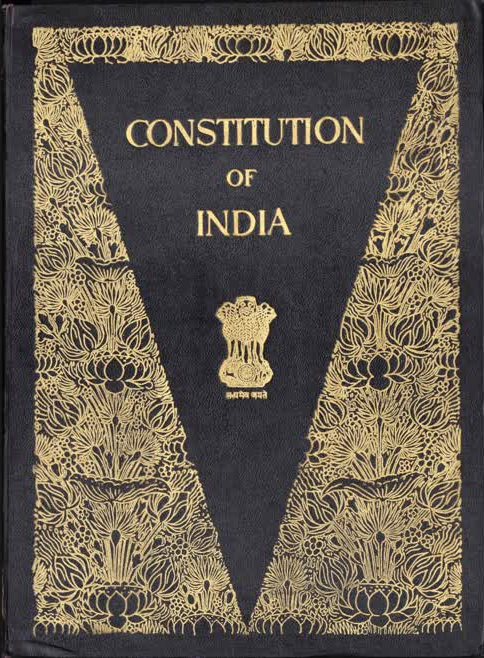
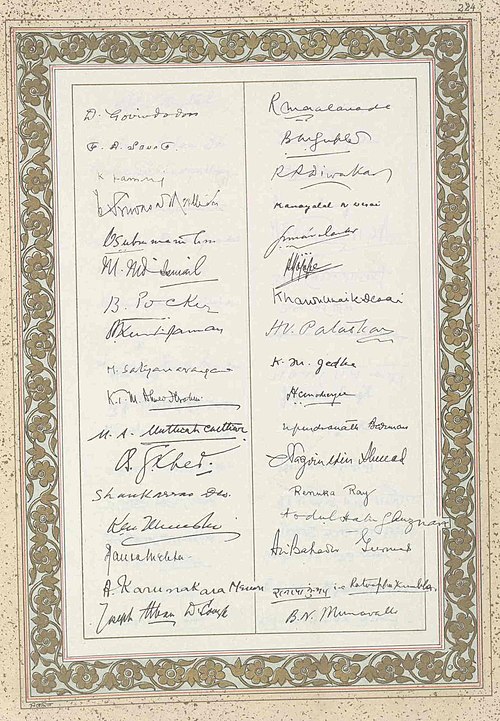
The Constitution of India has been described, interpreted, and reflected upon by a wide range of voices, from members of the Constituent Assembly and political leaders to administrators and observers in India and beyond. These reflections engage with the Constitution as a transformative document, speaking to its promises of liberty, equality, social justice, and democratic governance. Some voices celebrate its achievements, such as the abolition of untouchability, the guarantee of fundamental rights, and the extension of universal franchise. Others reflect on its responsibilities, reminding us that its success ultimately depends on how it is understood, upheld, and lived by the people.
-
Let us explore how the Constitution of India was perceived, both within the country and across the world.

“Thousands of Indians poured from the hills and from farm lands into the cities last night to celebrate the birth of the independent Indian Republic… Hotels are packed with visitors, and buildings are strung with hundreds of thousands of colored lights as ancient India prepared to become the world’s youngest republic.”
- A Reuters dispatch, reprinted in multiple Commonwealth papers, described the celebrations of republic day
"The Indian Constitution is first and foremost a social document. Themajority of its provisions are either directly aimed at furthering the goals of the social revolution or attempt to foster this revolution by establishingthe conditions necessary for its achievement. Yet despite the permeationof the entire constitution by the aim of national renascence, the core of the commitment to the social revolution lies in Parts III and IV, in the fundamental Rights and in the Directive Principles of State Policy. These are the conscience of the Constitution"
- Grenville Austin, Historian of the Indian Constitution
"The Indian Constitution established a system of Government which is almost quasi-federal, almost devolutionary in character, a unitary State with subsidiary federal features rather than federal States with unitary features." He hailed the founding of the Indian Constitution as ‘the biggest liberal experiment in democratic government’.
- Sir K.C. Wheare, Australian academic
Adult franchise is the most potent instrument for the removal of various disabilities and untouchabilities which disfigured our social structure in the past.
-Kailash Nath Katju, Minister of Home Affairs (1951 – 1955)
“The most noticeable feature of the Constitution is the inclusion of a number of justiciable Fundamental Rights. These will be the sheet-anchor of our liberty and equality in every sphere of life. There will be freedom of speech, freedom of Press, of meeting, and of organization of parties. Untouchability has been completely abolished and its practice in any form penalized. There will be no exclusiveness, no domination by any one and no room for personal or party rule. The rule of law will prevail and will be scrupulously upheld by an independent judiciary.”
-Balasaheb Gangadhar Kher, Former Chief Minister of Bombay State (1947-1952)
“The new Constitution is both a triumph and an opportunity: It represents a triumph of the principles of true democracy, of popular will over the forces of foreign domination, feudal despotisms, religious bigotry and social stagnation. India has emerged as a unified, democratic and secular State based on principles of Liberty, Equality and Social Justice.”
-Balasaheb Gangadhar Kher, Former Chief Minister of Bombay State (1947-1952)
The inauguration of the Republic is an occasion when the people of India should re-affirm their resolve to be a force for world peace.
-Rajagopalachari, last Governor-General of India (1948–1950), Union Minister of Home Affairs (1950 – 1951)
India, happily, is a federal republic, and her Constitution makes provision for its own modification without revolution in the light of experience. Thus we set sail with a fair wind and high hearts into the unknown future.
-Aurthur Moore, managing editor. The Statesman (Calcutta). 1933- 42; president, Indian and Eastern Newspaper Society, 1939-43
"The great thing that this Constitution brings to the notice, not only of this country but of the whole world, is the abolition of untouchability. Untouchability was a slur and a blot on the fair name of India. Great avatars and great saints tried their level best to abolish untouchability, but it was given to this august Assembly and the new Constitution to say in loud terms that no more shall untouchability stay in our country... The Harijans to the last man will uphold the Constitution."
—Shri V. I. Muniswamy Pillai, Member of Constituent Assembly of India
"No Constitution can please the different sections of any country, let alone a country like India, but the overall picture to my mind is very satisfactory and not disappointing. I have great faith that this man-made Constitution will succeed if men will be genuine and generous enough in the working of the Constitution... I have faith enough to say that I am looking forward to a great future for the scheduled tribes as well as for others because it would be for us to make or mar the future of our country, to make or mar the Constitution."
—Shri Jaipal Singh Munda, prominent leader of the Indian tribals and the Jharkhand movement
"I believe, that, by and large, we have hammered out a good Constitution. It will be fallible and it will be necessarily imperfect as it is the product of imperfect human beings, but I believe we have done a good job of work and I believe that this Constitution deserves not only our good wishes but our blessings."
—Mr Frank Anthony, member of the Constituent Assembly of India during 1946–50 and represented the Anglo-Indian community in assembly
"The women of India are happy to step into their rightful heritage of complete equality with men in all spheres of life and activity. I say so because I am convinced that this is no new concept which has been postulated for the purpose of this Constitution, but is an ideal that has long been cherished by India, though tragically debased it in practice. This Constitution affirms that ideal and gives the solemn assurance that the rights of women under law will be wholly honoured in the Indian Republic."
—Begum Aizaz Rasul, Member of Constituent Assembly of India
"Equality of rights is a great thing and it is very good that it has been put into the Constitution. People outside have been saying that India did not give equal rights to her women. Now we can say that when the Indian people themselves framed their Constitution they have given equal rights to women like every other citizen of the country. That in itself is a great achievement and it is going to help our women not only to realize their responsibilities but to come forward and fully shoulder their responsibilities to make India a great country that she had been."
—Shrimati Ammu Swaminathan, member of the Constituent Assembly of India
"A Constitution will live or die in so far as it caters to the happiness, the life and the liberty of the ordinary man, the common man. It is in his name that we have framed this Constitution; it is in his name that we have assembled here. Let us work this Constitution in his name, let us go ahead in his name, under the blessings of the Almighty and under His guidance and the co-operation of the people of India, and reach the goal envisaged by Mahatma Gandhi and all our prophets, sages and seers."
—Shri H. V. Kamath, member of the Constituent Assembly of India
"Our Constitution is today ushered into the world with a declaration of Fundamental Rights, which can be traced back to the Magna Carta, the Petition of Rights and the Bill of Rights—rights which have been by philosophers of the 18th century and incorporated into constitutions that have come into existence since then. These rights are also incorporated in our constitution for all the world to see. This freedom of the individual, freedom of religion and expression, security of life, liberty and property and pursuit of happiness have been insured and secured to every individual in the framework of our Constitution. It is a constitution based on democracy with all the experience"
—Annie Mascarene,member of the Constituent Assembly
"One great merit of this constitution, I consider, is that the people of this country are not going to have a constitution very different from what they were familiar with during the last ten or twelve years. It is essentially the Act of 1935. I do not mean it as a sort of condemnation. This is a merit, because the people will not have much difficulty in understanding the Constitution... There is one important change which will bring about, I hope, a radical change in the social and political views and opinions of people in the country and that is adult franchise. I have no doubt that the underdog or the common man in India will have greater power in his hands and he will be able to wield it to the benefit of the whole country"
- Dr. P.S. Deshmukh, India's first Union Minister of Agriculture
"Let it be given to us to be able to work this constitution in this generation and in the generations to come in such a manner that the lofty ideals that the Father of our Nation laid down may indeed become a living reality for the people of this land and that Gandhian socialism may be a contribution of this country to the world of man."-
Shrimati Renuka Ray, Member of Parliament, Lok Sabha (1957–1967)
"I claim that this constitution is an absolutely democratic constitution. It vests the sovereignty in the people and enables them to continue to exercise that sovereignty in full. Besides political sovereignty, there is social justice also given in this constitution. There is no discrimination between one individual and another. All can exercise equal rights without discrimination so long as a person is not opposed to morality or public conscience. Untouchability has been removed once and for all in the economic field also, although we have not said so in so many words we have ushered in a socialistic democracy."
—Mr. M. Ananthasayanam Ayyangar, first Deputy Speaker and then Speaker of the Lok Sabha in the Indian Parliament
"I have every confidence that people who accepted the leadership of Mahatma Gandhi and followed it over all those troublesome years and fought imperialism and achieved freedom for this country, would also have the necessary wisdom and statesmanship to help us to grow from this constitution into a higher and higher conception as well as experience and practice of democracy. I look forward to the day when it would be possible for us to achieve a Co-operative Commonwealth as Bapu was good enough to call it, though the Kisan-Mazdoor or Kalakar Raj—that is, the raj of the tillers of the country—not the raj of the idlers or exploiters, but the raj of the people who lived by their own toil, who made their contribution to the society in an honest and progressive manner, the raj of the people who lived, worked and died for democracy and democracy alone and never countenanced dictatorship."
—N. G. Ranga, founding president of the Swatantra Party (Not Req)
"In our anxiety to achieve our dreams of equality, of liberty and fraternity, let us not lose sight of the fact that even the attainment of these great things is possible only if we do not collapse in the beginning, the whole machine being wrecked either through ignorance or through wickedness. There are political parties who are anxious to achieve their goal because they really believe that the country because through violence alone they can achieve the fulfilment of their dreams... The Father of our Nation thought otherwise and taught other-wise and walked in his foot-steps and we have achieved very happy results. The very fact that we were able to frame this constitution so early—I call it 'early'—and in this peaceful manner, is due to the fact that we accepted him as our guide and leader."
—Balasaheb Gangadhar Kher, Former Chief Minister of Bombay State (1947-1952) (Not req)
"I hope and pray that the constitution fulfils the expectations raised by the resolution moved in this House by our Prime Minister three years ago and passed, and which forms now the body of the preamble. It is only in the fulfilment of that promise that this country will rise to its pristine glory"
- Shrimati Hansa Mehta, Member of the Constituent Assembly
"...With the franchise extended to all the adults, and with the ample checks provided to control the executive and the fundamental rights solemnly guaranteed by this Constitution, I do not think any fair-minded person would say that this constitution does not fulfill that democratic purpose, that it does not establish the scope and opportunity for the will of the people to dominate in the administration of their affairs... Ours is a Constitution which is neither a Socialist Constitution, nor a Communist Constitution, nor even for the matter of that, a Panchayat Raj Constitution. It is a people’s Constitution and a constitution which gives free and ample scope to the people of India to make experiments in Socialism or any other ism which they believe would make this country prosperous and happy. It would have been wrong on the part of the makers of the Constitution to have introduced their own political philosophy, and they have done well in making this Constitution, as I say, a cent per cent people’s Constitution, and leaving it at that."
—Shrimati Durgabai, member of the Constituent Assembly
"There are undoubtedly some features of the Constitution that deserve every praise. The Chapter on Fundamental Rights, though some of the provisions in it are open to serious criticism, does confer substantial rights on the people of the country and particularly on the oppressed minorities. It also gives certain assurances to the minorities that are of the greatest value. Take again the provisions relating to the manner in which the public servants are to be recruited in future. It is upon their honesty and efficiency that the future of the country will depend in no small extent. I think we can feel sure that in so far as the law can provide for it, this Constitution ensures that no man shall be appointed to a public post except on the ground of merit. That is undoubtedly a great achievement."
—Pandit Hirday Nath Kunzru, Member of the Constituent Assembly and Member of Parliament, Rajya Sabha (1952–1964)
"Up to now, this Constitution has been a paper document and it will remain so until January 26, 1950. Then will be the moment when it shall spring into life, for it is not the Constitution on paper that will rule and regulate the lives of the nation, individually and collectively, but it will be the spirit of the people behind it that will really regulate, that will really bring about the democracy which we are all trying to attain... It has often been referred to here as a blot on the Constitution, namely that all contact with God or religion has been lost, as if it were abandoned by it, that it is a godless Constitution, as if by calling it a secular democratic republic it has actually become secular or godless. I beg to submit that this is a misconception. We have not banished religion, by which I mean the innermost faith of man in a Providence that shapes our ends and our personal relationship with our Maker. It has not banished religion in that sense. It has banished religions, that is to say the conflict between one religion and another."
—Dr. P. K. Sen, was an Indian vascular and cardiothoracic surgeon
"I personally feel that this Constitution does provide us with the germs for changing the structure of society, and it will depend on us whether we are able to establish that sovereign democratic republic, not for the hollow benefit of registering one's vote and passing legislation, but a democracy which will take upon itself the policy of laissez-faire, but a democracy which will combine with it the healthy principle that that government governs best which governs least, which will combine with it the principle that it should encourage the active citizenship of the country."
—Shrimati Purnima Bannerji, member of the Constituent Assembly
"We have used, in developing our Constitution, those principles which had been advocated by Mahatmaji. You may remember in his tours of 1921, he was always mentioning only three sentences in each village—Khaddar, Untouchability and Hindu-Muslim unity. Khaddar we have perpetuated as the forerunner of village industries and we have emphasized the development of cottage handicrafts in the development of the country. Untouchability we have removed by law. Hindu-Muslim unity we have carried out by joint electorates. Prohibition is a thing which has been left to the provinces to be worked out. We have included it as one of the directives in our Constitution. It will be a great moral reform, the monetary equivalent of which may mean loss to the government of the province, but the moral equivalent of it would be a very great asset to the nation in future years." "And, finally, we have extended the franchise, which was three and a half crores of voters at the time when the British left this country, to 17 crores of people who will adorn the electoral rolls immediately next year." "It is thus that we have converted a dependency into a co-operative commonwealth. Who dares say that this is not an achievement worthy of our labours, and worthy of this great country and all in the space of three years!"
—Shri Pattabhi Sitaramayya, 1st Governor of Madhya Pradesh (1956 – 1957), President of the Indian National Congress (1948–1949)
"This Constitution gives us sufficient scope, if we remain true to our aspirations and to our ideals, to slow-ly bring about a change, a vital and fundamental change without having to take recourse to violent changes in the Constitution, and will enable us to realize our ideal, which is a non-violent and non-exploiting society where all men will be equal and will have equal opportunity for their self-development."
—Shri Shankarrao Deo, member of the Constituent Assembly
"India has been able to raise her head in history only when there has been a strong Central Government established. Otherwise, there has been nothing like Indian history, nothing like the glory that was Ind. Therefore, we should not forget that when we have to counter that tendency, that fissiparous tendency, that centripetal tendency—let us not forget—that it is very necessary that the Centre must be made strong."
—Pandit Balakrishna Sharma “Naveen”, member of the Constituent Assembly
"If there are shortcomings, if there are defects, if there are omissions or sins of commission, working experience will reveal them to us. If we work it with the right spirit, if we are intellectually honest, if we have nothing but the good of the people at heart, then I for one feel sure that, notwithstanding defects, notwithstanding shortcomings, this Constitution can be worked in such a manner that real democracy may in a short time be established, and if not in the immediate future, within five years or ten years, the people of this country may become the real rulers of this country."
—Shri K. T. Shah, member of the Constituent Assembly of India
"No cobbler in the world can make a pair of shoes which would enable a lame and faulty man to walk well and fast. No optician in the world can prepare an eye-glass which can make the blind or the purblind see clearly. No tailor can make an ugly person look handsome and beautiful. Therefore I say the whole success or failure of this Constitution would lie in the spirit, in the hands of the people who want to work it, and it is on them that the success or failure in the ultimate analysis depends."
—Shri Lakshmi Kanta Maitra, member of the Constituent Assembly of India.
"All that a constitution can provide is that the will of the people shall prevail and I think this Constitution has done it to the fullest extent. Therefore, it is necessary that instead of indulging in carping criticism we should from now develop the idea of the sanctity of this Constitution. It is only by making the people believe that through this Constitution they can achieve all that they want that it will become sacred; that no one, neither military power nor any other power, will dare to break the Constitution through force or fraud."
—The Hon'ble Shri K. Santhanam, the Union Minister of State for Railways and Transport from 1948 to 1952 and member of the Constituent Assembly,
"EVEN as every individual needs his own habitation with its appropriate furnishing, so does every nation. Unhappily, both with individuals and with nations, this is frequently second-rate or second-hand, but India is fortunate in being able not only to possess her own land but also freely and wisely to determine what shall be her constitutional endowment. It has been a great task but its achievement is worthy craftsmanship and an inspiring translation of the finest political ideals. Europe itself can take heart from this Indian example, and for that we should be thankful to God. May it enable India to press forward with equitable economic reconstruction and find in her house an abiding spirit of fraternity and peace. And may January 26th be for ever a day of rejoicing and fulfillment."
- Mr. Reginald Sorensen, was a British Unitarian minister and a Labour Party politician who served as a Member of Parliament in the House of Commons of the United Kingdom for over thirty years between 1929–1931 and 1935–1964.
"I have a great affection and admiration for the people of India since my visit in 1944 and I send my best wishes for her future and the success of her new Constitution."
- The Rt. Hon. J. Milner, 1st Baron Milner of Leeds
"I would take this opportunity of expressing my sincere good wishes for the future happiness and well-being of the people of India under the new Constitution and, particularly, for the successful and orderly development of Indian air transport, both in the domestic and the international field. The success which has marked its early years has been widely noted and augurs well for the future."-
Sir Frederick Tymms, KCIE MC, a pioneer Arctic aviator
" I wish to convey my heartiest congratulations to the leaders and people of India on the inauguration of the Constitution for the Indian Republic. This constitution has been framed after long and careful consideration by the chosen representatives of India and approved by them in the Constituent Assembly.
Tacitus wrote that it was easier for a republican form of Government to be acclaimed than realised. This thought is no doubt well in the minds of the Government of India.
In the light of their practical experience of affairs in the two and a half years which have lapsed since the transfer of power to their hands, they may be heartened by the good wishes of their friends all over the world and not least, if I may say so, from those who, as I have, served and lived in India for nearly forty years.
The manner in which India has faced her difficulties has given just cause for belief in her capacity to carry the new Republic to the goal which its authors have designed. The British in India and the British now retired from India have noted with appreciation the broad-mindedness which has brushed aside memories of past bitterness and has thereby greatly facilitated the maintenance of those good relations as between Indians and British united in the endeavour to make every possible contribution to the welfare of what has become one of the great nations of the East and a full and equal member of the Commonwealth.- Sir John Woodhead, a former civil administrator in India (Review)
"ALL of us in this country, without distinction of party, will unite in wishing India well under her new Constitution. She has many problems to face, but in dealing with them her statesmen can be assured of the sympathy and good will of all the peoples of the British Commonwealth."
- Mr. L. S. Amery, was a British Conservative Party politician and journalist.
I take this opportunity of expressing my most friendly good wishes towards India, and my hope that India may be able to preserve a middle way between the two blocs into which, unfortunately, so much of the world is divided. I hope that Asia will, during the next hundred years, acquire a cultural eminence that has been lacking in the recent past, and, if so, India must lead the way.
- Dr. Bertrand Russell, was an English philosopher, logician, mathematician, and public intellectual (Review)
The inauguration of the Constitution of the Indian Republic on January 26 is both an outstan
ding event in the agelong history of India and also a natural development particularly from the events of recent years.
A Briton who has spent the greater part of his life in India and whose family has been connected with India for a century and a quarter cannot but be moved by the great events which have taken place during his generation and by the privilege which has been accorded to him to take even the tiniest part in these world-shaking events.
The manner in which India’s leaders have grasped the immense problems with which they have been faced strikes the imagination and is an augury of the great days which lie before the country. I wish the leaders and the people all good fortune in their great task-
Sir Edward Charles Benthall, KCSI, was a British businessman and public servant
I am very much honoured to have been given the opportunity of sending a message to the people of India upon this historic occasion. In wishing happiness and prosperity to India I know that I am not only voicing my own sentiments, for the feeling of goodwill towards India is universal throughout Great Britain.
We wish well towards India because of the past, and because of the future. Because of the past, since for over two hundred years our destinies have been closely linked. We in this country are proud of our past connection with India, and of the multitude of Britons who spent their lives in devoted service in that great sub-continent. Because of the future, since the peace of Asia, and consequently that of the whole world, must depend to a large degree upon Indian stability and prosperity. It is a source of pride and confidence to us to know that Britain and India are facing the tremendous tasks that lie before the human race together, hand in hand. The two Nations have the same ideals at heart, the same principles of justice, the same conception of democracy.
It would be foolish to underrate the gravity of the problems and dangers that confront us. But, immensely strengthened by the adherence of a free India, the British Commonwealth will surmount them all- Sir Godfrey Nicholson, was a British Conservative Party Member of Parliament
The emergence of India into the status of a sovereign independent democratic Republic would of itself form a landmark in Asian political evolution; but the circumstances of this emergence must excite the surprised admiration of every student of comparative politics.
The fact that it has been possible to reconcile the constitutional forms freely selected by the Indian people with the continued full and free membership of the Commonwealth of Nations which their leaders have decided to be in the national interest is a proof both of their own high statesmanship and of the power which the Commonwealth structure displays in adapting itself to the needs of the free and equal sister nations of which it is composed.
India to-day achieves her aim, set before her people for many years by the Indian National Congress, the spearhead of her awakened national spirit, of adopting Republican institutions as a symbol of her freedom. Her new constitution is a magnificent example of that synthesis of eastern and western minds on which her present and future greatness depends. Its framers have selected what they believe she needs from the best model constitutions of the western democracies; they have combined their ingredients into a new shape which has been integrated in characteristic fashion to express and lend precision to the ideals for which Mahatma Gandhi lived and died.
My own countrymen have shown, by the legislation recently undertaken in the Mother of Parliaments, that they will do all in their power to assist India in her progress along the new road that her people have marked out for themselves. For myself, I am happy that I lived to see the day when the national spirit of India, whose working it has been my privilege to study and to acclaim sympathetically for more years than I care to reckon, achieves its final goal; for it has long been my conviction that only through the satisfaction of India’s national aspirations can the two countries I love equally attain that close and cordial relationship in spirit, mind and heart, on which, under Providence, the future peace of Asia and of the world depends.
- Prof.Laurence Frederic Rushbrook Williams, CBE, FRSA, was a British historian and civil servant
I have watched with great pleasure the transfer of the control of Indian affairs from British to Indian hands which I regard as one of the most outstanding achievements of the two nations. I congratulate the Indian people on the inauguration of their new Constitution which I believe will prove a powerful influence for peace in the world and a happy augury for friendly relations between the United Kingdom and the Republic of India.
- Sir Francis Lewis Castle Floud, KCB, KCSI, KCMG was a British civil servant and diplomat.