The Visual Aspect of the Indian Constitution
The original Constitution of India is not only a legal document but also a work of art. Each page was carefully illustrated with motifs drawn from India’s civilizational history—ranging from the Indus Valley and the Vedic age to the freedom movement—visually narrating the cultural journey of the nation. Created under the artistic direction of Nandalal Bose and his team at Kala Bhavana, Visva-Bharati, these illustrations complement the text of the Constitution and symbolically connect India’s past with the democratic ideals of its present.
Let us explore these remarkable paintings and the stories they tell.


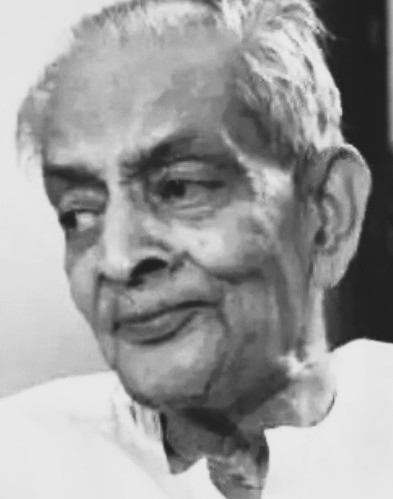
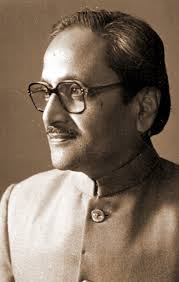
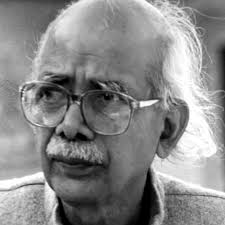
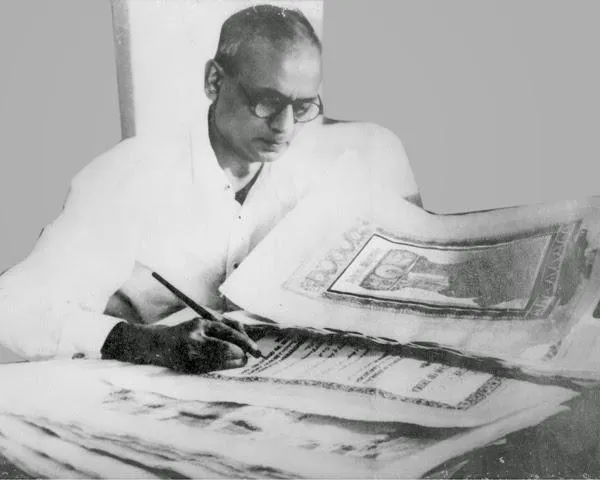
The illustrations of the Constitution of India were created under the artistic leadership of Nandalal Bose, head of Kala Bhavana, Visva-Bharati at Santiniketan. Working with a group of his students and associates, Bose guided a remarkable artistic project that transformed the Constitution into a richly illustrated manuscript. Drawing inspiration from India’s artistic traditions—from Ajanta murals and classical sculpture to miniature painting and folk motifs—the team created borders, narrative panels, and symbolic imagery that visually narrated India’s cultural and historical journey. Among the principal artists who executed many of the illustrations were Beohar Rammanohar Sinha, Dinanath Bhargava, Vinayak Sivaram Masoji, Biswarup Bose, A. Perumal, Dhirendra Krishna Deb Barman, and Kripal Singh Shekhawat.
The visual richness of the manuscript was further enhanced by artists who contributed decorative motifs, borders, and illustrations across different sections of the document. These included Nibedita Bose, Amala Sarkar, Gouri Bhanja, Jamuna Sen, Jagdish Mittal, Bani Patel, Rajniti Singh, and Sumitra Narayan. The manuscript’s text was equally a work of craftsmanship: the English version was hand-written in elegant calligraphy by Prem Behari Narain Raizada, while the Hindi version was beautifully inscribed by Vasant Krishanrao Vaidya. Together, this collective effort turned the Constitution into a document where law, art, and national identity meet.

This first page of the Constitution is not just ornamental; it establishes the symbolic foundation of the entire manuscript. The illustration depicts the Lion Capital of Ashoka, chosen as the National Emblem of India, accompanied by the words Satyameva Jayate in Devanagari, which became the nation’s guiding motto. The emblem itself is deeply layered: four lions (three visible, the fourth implied) stand atop a circular abacus decorated with four animals: lion, bull, elephant, and horse, each separated by an Ashoka Chakra. Together, these elements evoke India’s ancient Buddhist heritage, Ashoka’s vision of moral governance, and the continuity of dharma through time.
What is striking in this painted version is the attention to authenticity and vitality. Under the guidance of Nandalal Bose, Dinanath Bhargava carefully studied living lions at the Kolkata Zoo to capture accurate musculature, expressions, and presence. This naturalistic observation distinguishes the emblem from being a flat reproduction of the Sarnath sculpture, instead lending it life, movement, and a sense of guardianship. The lions appear protective yet dignified, their stance embodying strength rooted in moral authority rather than brute force.
The border framing the emblem complements its centrality: intricate floral and geometric motifs in gold, red, and green reflect the manuscript’s hand-crafted richness, while also grounding the emblem in India’s broader artistic traditions. The inclusion of Satyameva Jayate ties the visual to a philosophical truth that transcends politics, asserting that legitimacy rests on truth and justice.
Placed at the opening of the manuscript, this page works as a visual preamble to the text that follows. It sets the tone for the entire Constitution, affirming that the document is not only a legal framework but also a moral and cultural compact. The emblem and its framing imagery signal continuity with India’s past while projecting the ethical aspirations of a newly independent nation
This illustrated page introduces Part I of the Constitution, The Union and its Territory, framed with an image that connects the founding text of modern India to its ancient roots. At the top is the figure of a robust bull drawn from the well-known seal of the Indus Valley Civilisation at Mohenjo-Daro. The bull seal is one of the most recognisable symbols of Harappan art, often understood as a marker of fertility, energy, and prosperity, as well as a reference to the networks of trade and exchange that supported early urban life. By placing this motif at the beginning of the constitutional text, the artists establish a deliberate link between India’s deep civilizational past and the aspirations of the newly independent republic, suggesting continuity, strength, and leadership.
The artwork is attributed to Beohar Rammanohar Sinha, while the ornate border around the text carries the signature of Kripal Singh Shekhawat. Their collaboration reflects the collective ethos of the Constitution manuscript project under the direction of Nandalal Bose, where the talents of multiple artists came together to give the document its distinctive visual character. The border itself, richly detailed with stylised floral and geometric patterns, provides a decorative frame that enhances both the solemnity and the beauty of the text.
Through this careful placement of the Harappan bull, the Constitution is visually anchored in a narrative that stretches from the achievements of the subcontinent’s earliest civilisations to the forging of a modern democratic state. It reminds the reader that the principles outlined in the text are not only forward-looking but also rooted in a long continuum of cultural endurance and innovation.


This illustration introduces Part II of the Constitution, which addresses the theme of citizenship, through a visual evocation of a Vedic ashram. The scene depicts a gurukul environment where ascetics are shown engaged in prayer, teaching, and ritual offerings, with yajnas burning at the centre. The architecture of simple thatched huts, the abundance of flowering trees, and the surrounding rocky landscape situate the scene in a timeless natural setting, where learning and spiritual practice unfold in harmony with the environment. By foregrounding the gurukul, a space historically associated with education, discipline, and the transmission of knowledge, the illustration symbolically connects the idea of citizenship with the virtues of awareness, wisdom, and responsibility that guide civic life.
The artwork is jointly credited to Amala Sarkar and Nandalal Bose, whose signatures appear on the page. Their choice of a Vedic ashram underscores the constitutional vision of India as a community bound together not only by law but also by a deeper cultural ethos that values collective learning and ethical grounding. The visual vocabulary, restrained in palette yet rich in detail, highlights the significance of knowledge as the foundation for building a responsible and participatory citizenry.
Placed at the opening of the section on citizenship, this gurukul scene does more than decorate the text. It establishes a philosophical frame, suggesting that the rights and duties of citizenship are inseparable from a culture of learning, reflection, and moral growth. By invoking the imagery of the ashram, the Constitution aligns the ideals of modern nationhood with India’s long traditions of cultivating knowledge and wisdom as the basis of social life.
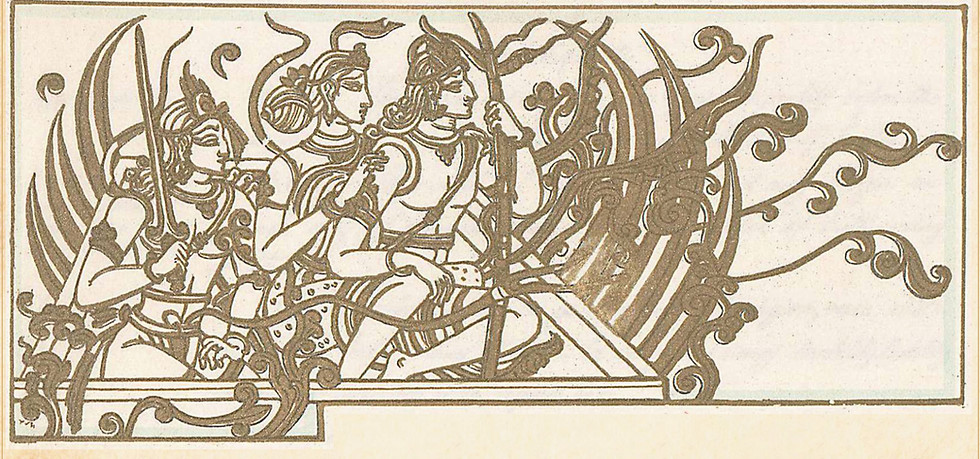
This illustration marks the opening of Part III of the Constitution, which outlines the Fundamental Rights—those essential guarantees of freedom, equality, and justice that form the moral and legal backbone of the Republic. To introduce this section, the image turns to one of the most enduring moral narratives in Indian thought: a scene from the Ramayana. Depicted here are Shri Ram, Sita Mata, and Shri Lakshman, seated together amidst a rhythmic flow of foliage and ornamentation. The composition captures not a moment of battle or grandeur, but of poised movement—an image of harmony, restraint, and quiet strength that mirrors the constitutional values of discipline and righteousness.
The trio, bound by duty and guided by dharma, embody the ethical core of the Ramayana: the victory of good over evil, truth over falsehood, and justice over tyranny. In the context of the Constitution, their presence becomes more than devotional—it is philosophical. Just as Ram’s triumph over Ravan represents the moral order prevailing over chaos, the Fundamental Rights affirm the rule of law as the guardian of justice and the protector of human dignity. The illustration thus translates a mythic ideal into a civic one, suggesting that freedom without righteousness, or power without restraint, cannot endure.
Rendered in a limited, earthy palette, the artwork’s visual rhythm—interlacing vines, flowing garments, and balanced gestures—reflects the influence of the Bengal School, especially the Santiniketan tradition that sought to merge classical Indian sensibilities with modern expression. The artist, Jamuna Sen, inscribes her name in Bengali on the border, subtly situating the work within that lineage of cultural revival and reform that shaped early twentieth-century Indian art. Her style, delicate yet assured, invites the viewer to look beyond the narrative surface and sense the moral atmosphere that underpins it.
By placing this Ramayana scene at the beginning of the section on Fundamental Rights, the Constitution’s visual programme makes a profound statement. It frames the idea of rights not merely as entitlements but as expressions of ethical responsibility—a reminder that personal freedom must coexist with social duty. In doing so, the illustration bridges the epic’s timeless moral order with the modern Republic’s legal and moral framework, uniting the ancient pursuit of dharma with the contemporary promise of justice, liberty, and equality for all.

This illustration introduces Part IV of the Constitution, which sets out the Directive Principles of State Policy—those moral and social ideals meant to guide the State in shaping a just and equitable society. Drawing upon one of the most profound moments in Indian philosophical tradition, the scene portrays Krishna counselling Arjuna on the battlefield of Kurukshetra. The chariot surges forward, its horses alive with motion, while Arjuna, momentarily stilled in doubt, listens intently to Krishna’s words. This exchange, captured with remarkable economy of line and form, represents the timeless dialogue between action and conscience, between the individual’s moral duty and the larger ethical order.
In the Mahabharata, this is the instant before the great war begins—the pause between turmoil and resolve. Arjuna’s hesitation mirrors the human struggle to reconcile personal duty with universal justice, while Krishna’s guidance transforms that hesitation into purposeful action. Within the constitutional context, this image finds deep resonance: just as Krishna’s counsel anchors Arjuna’s moral clarity, the Directive Principles serve as the Republic’s moral compass. They do not command by force of law but inspire through vision—urging the State towards equality, welfare, and collective responsibility.
Executed in a warm, ochre tone, the composition combines dynamism with composure. The flowing lines of the horses and the circular rhythm of the chariot wheels create a sense of movement balanced by the calm authority of Krishna’s gesture. The artistic collaboration between Bani Patel, Nandalal Bose, and Vinayak Shivaram Masoji reflects the shared aesthetic of the Shantiniketan school, where traditional Indian forms were revitalised to express the ideals of a modern nation. Their signatures, discreetly placed along the borders, attest to this collective creative enterprise that defined the visual identity of the Constitution.
Positioned at the beginning of the section on the Directive Principles, the Mahabharata scene operates as more than ornamentation—it is a moral invocation. It reminds readers that governance, like action in the Gita, must arise from discernment and duty, not desire or self-interest. Through the visual idiom of the epic, the Constitution asserts that the ethical vision of the State must be guided, like Arjuna, by wisdom, compassion, and an unwavering commitment to the greater good.

This illustration introduces Part V of the Constitution, which outlines the framework of the Union Government, through a scene from the life of the Buddha. Depicted here is the moment of the Dharmachakra Pravartana Sutra—the first sermon delivered by the Buddha at Isipatana, the deer park of Sarnath, shortly after his enlightenment. Under the shade of a broad, serene tree, the Buddha sits in meditation posture, hands raised in the gesture of teaching. Around him are his first five disciples, their faces intent with reverence and reflection, as deer and birds quietly share the space—a reminder of the compassion that extends to all living beings.
This moment, known as the Setting in Motion of the Wheel of Dharma, marks the beginning of the Buddha’s teaching journey. It was here that he articulated the Four Noble Truths, the essence of his philosophy: the nature of suffering, its cause, its cessation, and the path leading to liberation. In the context of the Constitution, this scene carries layered meaning. Just as the Buddha’s sermon offered a moral and intellectual compass to his followers, Part V of the Constitution lays out the guiding principles for governance—seeking balance between authority and compassion, order and wisdom. The serenity of the scene contrasts with the weight of its message: governance, like the path of Dharma, demands clarity of vision and moral restraint.
The artwork, executed collaboratively by Nivedita Bose, A. Perumal, and Nandalal Bose, bears the signatures of all three along its borders. Their rendering combines stillness and detail with a fine linear rhythm characteristic of the Shantiniketan school. The deer park, drawn with quiet natural grace, situates the spiritual act within a living landscape, blurring the line between the human and the natural world. The soft, monochrome shading evokes calm contemplation rather than grandeur, inviting the viewer into the meditative ethos of the moment.
Placed at the opening of Part V, the scene performs more than an illustrative role. It establishes a tone of mindful governance—suggesting that the true exercise of power rests on understanding, patience, and ethical reflection. By invoking the Buddha’s first sermon, the Constitution connects the structure of modern statecraft to India’s ancient philosophical tradition, where leadership begins not with dominance, but with the pursuit of wisdom and the turning of the wheel of justice.

This illustration introduces Part VI of the Constitution, which lays out the framework for the States listed in Part A of the First Schedule, through a contemplative scene from the life of Mahavira, the twenty-fourth and final Tirthankara of the Jain tradition in this era. Mahavira is depicted here in deep meditation, seated in a cross-legged posture, palms resting one over the other in quiet concentration. His eyes are closed, signalling renunciation of the material world and an inward turning toward liberation. On either side of him rise flowering trees, their branches heavy with blossoms, while to his right a peacock stands alert, its plumage rendered in fine ornamental detail. The setting evokes harmony between the spiritual and the natural, aligning Mahavira’s message of ahimsa—non-violence—with the wider environment that sustains all beings.
The choice of Mahavira at the threshold of Part VI carries layered meaning. In Jain philosophy, the discipline of meditation is not merely withdrawal but a conscious act of self-governance over desires, actions, and intentions. Likewise, Part VI of the Constitution concerns the governance of the States, demanding clarity, restraint, and moral grounding in their relations with the Union and with one another. The meditating figure of Mahavira becomes an allegory of governance itself: power exercised without inner control risks disorder, but power guided by self-mastery and compassion creates balance and order. The surrounding trees, fertile and symmetrical, symbolise growth under such balance, while the presence of the peacock suggests the beauty that emerges when restraint and vitality coexist. This illustration is distinctive for its vivid palette—reds, greens, and blues woven together in bold contrast. Unlike the many monochrome pages of the Constitution, this scene is alive with colour, giving it a celebratory yet contemplative aura. It was executed collaboratively, bearing the signatures of Jamuna Sen and Nandalal Bose, two prominent artists of the Shantiniketan circle, whose style often combined simplicity of line with cultural symbolism. The border design, more geometric in form, carries the signature of the artist Rajniti, blending decoration with narrative content.
Placed at the opening of Part VI, this image performs more than an illustrative role. It establishes a tone for the interpretation of state governance: just as Mahavira’s life taught that liberation arises through self-discipline, compassion, and harmony, so too does the Constitution suggest that the stability of states within the Union depends on ethical restraint, balance of authority, and peaceful coexistence. In this way, the meditation of a Tirthankara becomes a metaphor for the discipline of statecraft—quiet strength, moral clarity, and harmony as the foundations of enduring order.

This illustration introduces Part VII of the Constitution, which addresses the States in Part B of the First Schedule, through a dramatic scene depicting the spread of Buddhism under the patronage of Emperor Ashoka. The central figure, Ashoka himself, is shown atop a richly adorned elephant, the animal’s grand finery underscoring both royal authority and the ceremonial nature of the procession. Around him gather monks and attendants, some carrying offerings, others bearing symbols of devotion—pots filled with flowering plants, gestures of reverence, and instruments of ritual. The scene is alive with movement, echoing the dynamism of a tradition spreading across frontiers. Executed in the style of the Ajanta murals, the illustration captures the distinct grace of that artistic lineage. Figures are depicted with bare chests and adorned with jewellery, their postures fluid, their expressions serene yet purposeful. This visual language connects the Constitution to India’s ancient artistic heritage, reminding the reader that cultural continuity is as essential to nationhood as political organisation. The style also evokes the blending of power and piety that characterised Ashoka’s transformation after the Kalinga war—his shift from conquest by arms to conquest by Dharma.
Placed at the beginning of Part VII, the scene functions as a metaphor for integration and dissemination. Just as Ashoka extended Buddhism beyond India’s borders, knitting together lands with shared ideals of compassion and peace, the Constitution here contemplates the integration of Part B states into the Union—distinct entities, yet bound within a common framework. The procession becomes symbolic of a journey: the flow of values and governance that transforms multiplicity into unity. In this way, the image links imperial legacy with democratic structure, suggesting that the binding force of a polity lies not in coercion but in the shared acceptance of principles.
The illustration bears the hallmark of collaboration. Nandalal Bose, deeply inspired by Ajanta’s traditions, lent the fluid line and rhythmic movement that define the composition. The signature of A. Perumal is also visible, affirming the collective spirit of its creation. The border design is signed by Beohar Rammanohar Sinha, who also designed the Constitution’s Preamble and numerous other pages, here writing his name as Rammanohar in Hindi. Together, their work ties the scene to both a historic and modern lineage: from the caves of Ajanta to the document of the Constitution, artistic expression becomes a bridge across centuries. More than illustration, this page sets a tone. Ashoka’s procession is not merely a historical memory but a parable: governance that endures must move beyond conquest, toward compassion and shared purpose. Just as the elephant carries the emperor not as a symbol of domination but as a bearer of Dharma, so too does the Constitution suggest that statehood, even in its diversity, must be carried forward on the principles of justice, peace, and unity.

This illustration introduces Part VIII of the Constitution, which addresses the States listed in Part C of the First Schedule, through a striking evocation of Gupta art. At the centre of the composition is a richly adorned Gandharva—a celestial being from Hindu mythology, associated with music, harmony, and the role of intermediary between the human and the divine. The Gandharva, dressed in elaborate ornaments and a turban, gestures outward with an expressive arm, suggesting movement, communication, and flow. His figure is dynamic, leaning across the panel as if bridging two realms, while his jewellery and textiles evoke the opulent refinement characteristic of Gupta aesthetics. To the left of the frame, a lush tree in bloom, heavy with fruit and foliage, emphasises the abundance and fertility often celebrated in this golden age of Indian art. Behind him, stylised architectural motifs and geometric forms remind the viewer of the Gupta era’s balance between spiritual symbolism and structural elegance.
The choice of a Gandharva at the threshold of Part VIII resonates deeply with the constitutional context. Gandharvas in Indian tradition were not only celestial musicians but also messengers who carried divine communication across realms. In this role, they embodied the bridging of boundaries, the weaving together of distinct worlds into a larger harmony. Similarly, Part VIII deals with the governance of Part C states—territories often diverse in character and history, yet brought into the constitutional framework of the Union. Just as the Gandharva mediates between divine and human, this Part suggests mediation between local distinctiveness and national unity. The figure, adorned and airborne, becomes a metaphor for integration: a being suspended between spaces, yet belonging to both.
Artistically, the illustration is informed by the ideals of Gupta art, a period often regarded as the classical pinnacle of Indian aesthetics. The Gupta style emphasised clarity of form, grace of movement, and symbolic richness, all of which are visible here—the poised limbs, the careful ornamentation, the gentle flow of lines. The floral cluster to the left recalls both natural beauty and fertility, hallmarks of Gupta decorative motifs, while the figure’s rhythmic posture reflects the age’s love for movement harmonised with spiritual purpose. This page also carries the layered legacy of its makers. While the composition is often attributed to Beohar Rammanohar Sinha, he deliberately refrained from signing it, considering the Constitution not as a project of individual recognition but as an offering to the nation. Instead, the signature visible on the border is that of Kripal Singh Shekhawat, inscribed in Devanagari. This act of collective authorship mirrors the collaborative spirit of the Constitution itself, where many hands and voices came together to shape a single guiding document. Placed at the opening of Part VIII, the scene sets a tone of fluid connection. Just as the Gandharva is a symbol of music, communication, and transcendence, the Constitution here frames governance as a harmonising force—integrating territories of varied histories into one federal structure. The image reminds us that governance, like music, depends not on domination but on rhythm, balance, and the careful blending of distinct notes into a shared melody. In invoking Gupta art and its celestial messengers, the Constitution situates its modern statecraft within India’s cultural continuum, where art, myth, and governance are all expressions of a deeper pursuit of harmony

This illustration introduces Part IX of the Constitution, which concerns the Territories in Part D of the First Schedule, through a graceful depiction of the legendary court of King Vikramaditya. The composition unfolds as a refined tableau of royal leisure and cultural splendour. At its centre, King Vikramaditya sits upon an intricately patterned throne, surrounded by courtiers and attendants, his posture composed yet animated, embodying both authority and intellectual curiosity. Around him, musicians and dancers enliven the scene, while a graceful deer and a flowering tree to the left infuse the setting with natural vitality. The gentle sweep of lines, the poised gestures, and the rhythmic arrangement of figures recall the elegance of early classical Indian art, where refinement and restraint coexist with expressive vitality.
Vikramaditya, whose name fuses vikrama (valour) and aditya (sun), has long stood as a cultural archetype of enlightened kingship—one who nurtured the arts, literature, and philosophy. His legendary court, said to host the celebrated ‘Nine Gems,’ symbolised a golden synthesis of intellect, creativity, and governance. In this constitutional context, the evocation of his court suggests a realm where knowledge and art thrive under just leadership, mirroring the ideals of civic harmony and collective progress envisioned in the Constitution. The artist, Jamuna Sen, captures this ethos with delicate precision—the ornamental motifs, stylised drapery, and expressive hands forming a language of refinement deeply rooted in Indian aesthetics.
Artistically, the illustration stands as a dialogue between memory and modernity. Sen’s treatment of line—fine yet decisive—echoes the narrative clarity of early mural traditions, while her choice of composition evokes an atmosphere of contemplative grace rather than ostentation. The serenity of the court scene becomes more than historical—it becomes aspirational, a metaphor for governance founded on intellect and empathy. Just as Vikramaditya’s court is remembered as a confluence of wisdom and beauty, Part IX also gestures towards a polity that integrates diversity with dignity. Through this image, the Constitution honours India’s artistic and philosophical heritage, suggesting that culture itself is a form of governance—a way of ordering the world through grace, imagination, and balance.
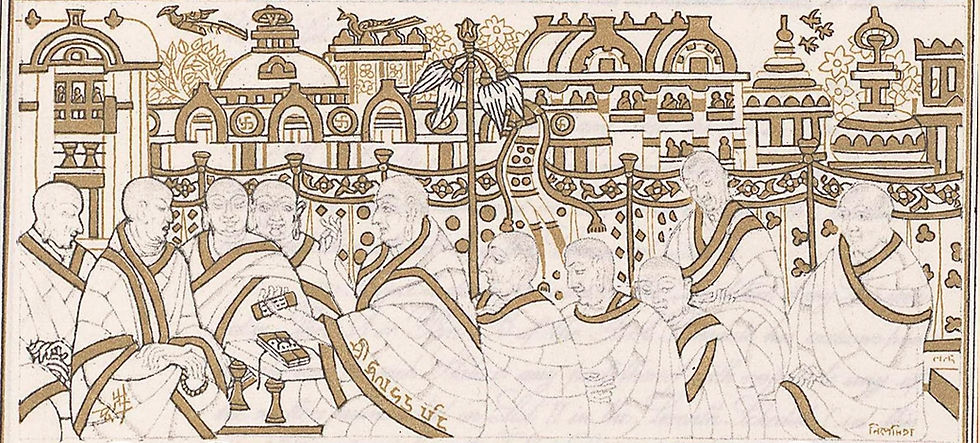
This illustration marks the beginning of Part X of the Constitution, which addresses the Scheduled and Tribal Areas, through an evocative portrayal of Nalanda—one of ancient India’s most renowned centres of learning. The scene unfolds in a rhythm of calm precision: monks in flowing robes sit engaged in study and discourse, their gestures gentle yet intent, their expressions serene. Behind them rises a stylised panorama of domed shrines, stupas, and monastery structures, rendered in architectural harmony that recalls the grandeur of the original Mahavihara. Birds glide above and trees bloom at the margins, weaving nature into this ordered world of scholarship. The linework is disciplined and luminous, with golden accents tracing both the intellectual and spiritual radiance that Nalanda once embodied.
Founded in the early centuries of the Common Era and flourishing for over 800 years, Nalanda was more than a university—it was a living monastery, an ecosystem of inquiry that drew students and teachers from across Asia. Its inclusion here symbolises not only India’s ancient commitment to education and dialogue but also the Constitution’s recognition of knowledge as a means of empowerment and inclusion. In invoking Nalanda at the threshold of Part X, the artists suggest that the ideals of shared learning and respect for difference remain central to India’s social fabric—principles that resonate strongly with the spirit of constitutional protection for diverse communities.
The stylistic language of the illustration reflects Shekhawat’s mastery of the Jaipur miniature tradition and Bose’s sensitivity to narrative structure. Their lines are sparse yet expressive, balancing ornament and order much like Nalanda balanced intellect and devotion. The seal above the panel, featuring the Dharma Chakra flanked by two cows, anchors the image within India’s emblematic vocabulary of moral law and sustenance. In the lower corners, the artists’ signatures remind us that this work, like the Constitution itself, is the result of collaboration—a shared act of creation. Framed at the opening of Part X, the Nalanda scene transforms an ancient image of learning into a timeless metaphor for equality and understanding, urging the reader to view governance as a continuing education in compassion, coexistence, and wisdom.
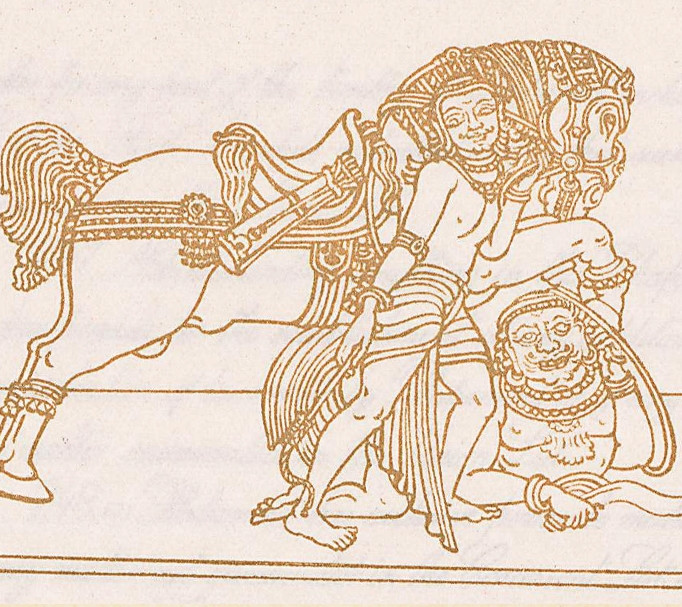
This illustration introduces Part XI of the Constitution, which addresses the relations between the Union and the States, through a composition inspired by the famed war horse sculpture of the Sun Temple at Konark, Odisha. The scene is rendered with rhythmic precision and dynamic balance: a powerful horse, richly adorned with harness and trappings, rears over a subdued figure beneath its hooves, while a warrior stands beside it, poised in control. His body, gracefully curved and taut with strength, conveys both motion and mastery. The intricate linework captures the elaborate ornamentation of the Konark style—the finely patterned mane, the jewelled harness, and the flowing drapery—imbuing the scene with both energy and elegance. The choice of the Konark warhorse as the visual emblem for this Part of the Constitution carries profound symbolism. The horse, representing vitality and disciplined power, mirrors the dynamic yet balanced relationship between the Union and the States—forces of strength that must act in coordination rather than conflict. The warrior’s composure amidst action suggests governance guided by restraint and harmony, qualities essential to a federal structure. Artist Jamuna Sen, with border embellishments by Amala Sarkar, translates the grandeur of Orissan sculpture into a linear idiom that remains faithful to its spirit while fitting seamlessly within the visual language of the Constitution’s art. Stylistically, the illustration reflects the architectural and sculptural sophistication of medieval Odisha, known for its interplay of movement, geometry, and symbolic depth. The forms are assertive yet poised, sculptural yet fluid, echoing the vitality of the Konark carvings that once celebrated cosmic order through the rhythm of stone. The war horse thus becomes more than a martial image—it embodies the disciplined energy of the state, the structured strength that sustains governance. Through this adaptation, the Constitution situates its vision of federal balance within India’s ancient aesthetic of harmony between power and purpose, reminding the reader that strength achieves meaning only through control and cooperation.
This illustration inaugurates Part XII of the Constitution, which concerns Finance, Property, Contracts, and Suits, through a profound invocation of divine rhythm and universal law. At its centre stands Shiva as Nataraja, the cosmic dancer whose movement embodies the pulse of creation and the stillness of dissolution. Enclosed within a flaming aureole, Shiva’s form unites grace with geometry—each limb balanced between repose and energy, each gesture resonant with metaphysical meaning. The figure’s lifted leg and poised arms mark the dance of the cosmos itself: a choreography of creation, preservation, destruction, concealment, and grace, known in the Shilpa-Shastras as Panchakritya.
Rendered in the manner of the Chola bronzes of South India—particularly those from Chidambaram, the sacred seat of Nataraja worship—this composition is both devotional and philosophical. The drum in his upper hand signifies the birth of sound and time; the flame in the other marks the dissolution of form; the raised hand in abhaya mudra grants protection and dispels fear, while the foot pressed on the demon of ignorance (Apasmara) represents the grounding of the spirit in truth. The lifted foot, pointing upward, offers liberation to those who seek it. Gouri Bhanja’s linear translation of the bronze into two dimensions preserves the sculpture’s vitality while highlighting the quiet symmetry of its design—the arch of fire looping gracefully around the god’s rhythmic motion. Her signature appears discreetly at the lower left corner, an acknowledgement of authorship without disturbing the divine centrality of the scene. Placed at the opening of Part XII, the image reads as a meditation on order, wealth, and ethical motion. Just as Shiva’s dance sustains the universe through balance and control, the financial and contractual provisions of the Constitution seek to maintain equilibrium between the spiritual and material life of the nation. The abhayamudra, offering assurance and benevolence, mirrors the state’s obligation to safeguard fairness and justice within the flow of economic life. The entire visual serves as a reminder that governance, like cosmic rhythm, depends on measured motion—an interplay between power and restraint, continuity and change. By invoking Nataraja at this constitutional juncture, the framers and artists aligned India’s legal and fiscal framework with one of its most enduring metaphors of harmony: the divine dance where energy and law become one


This illustration introduces Part XIII of the Constitution, which concerns Trade, Commerce, and Intercourse within the Territory of India, through an interpretation of one of India’s most monumental sculptural narratives—the Descent of the Ganges relief at Mahabalipuram. Carved into a granite cliff on the Coromandel coast, the original composition depicts gods, ascetics, and animals witnessing the descent of the celestial river, released from heaven to nourish the earth. In this drawing, Nandalal Bose and Jamuna Sen reimagine that ancient scene with clarity and reverence. At the centre stands Lord Shiva, calm and monumental, receiving the torrent of the Ganges in his matted locks to soften its fall. Around him, divine beings and earthly creatures fill the landscape, their forms woven together by flowing lines that suggest both the motion of water and the movement of life. Every figure in the composition contributes to the sense of collective participation—the hermits in meditation, the celestial beings hovering above, and the animals below that turn their heads in awe. The architectural backdrop evokes the rugged sanctuaries of South India, where nature and artistry blend seamlessly. The scene is a meditation on the idea of controlled flow: the Ganges must descend, but it must do so through moderation, channelled by divine wisdom.
In the constitutional context, this symbolism acquires striking relevance. Part XIII safeguards the free movement of trade and communication across India’s diverse territories—ensuring that economic life flows freely, yet within the channels of law. Just as Shiva tempers the celestial river to make it life-giving rather than destructive, the Constitution directs the nation’s commercial energies toward collective prosperity rather than chaos. Artistically, the work exemplifies Bose’s disciplined linearity and Sen’s fine sensitivity to contour. Their names, placed quietly along the border, reflect a shared authorship rooted in mentorship and collaboration—a hallmark of the Constitution’s artistic project. By evoking Mahabalipuram, a UNESCO World Heritage site where myth, nature, and craftsmanship converge, the illustration situates modern India’s vision of economic unity within its ancient tradition of harmony between force and form. The Ganges here becomes more than a river—it becomes a metaphor for circulation, connection, and renewal. In choosing this image, the Constitution reminds us that commerce, like the descent of the sacred river, must be free but not unrestrained—governed by balance, infused with purpose, and guided by the moral flow of dharma.

This illustration introduces Part XIV of the Constitution, which focuses on Services under the Union and the States, through a scene of regal deliberation drawn from the Mughal court of Emperor Akbar. The emperor, seated on a low throne with a bolster at his side, gestures in thoughtful engagement as scholars kneel before him, their manuscripts unfurled. Behind the emperor stands an attendant with a chauri, a fly whisk—a subtle emblem of decorum, hierarchy, and service. In the background, the elegant symmetry of Mughal architecture rises in soft perspective: bulbous domes, scalloped arches, and ornate gateways suggest the ordered grandeur of the imperial court. The composition is not merely historical; it is allegorical. Akbar’s court was famed as a centre of learning, tolerance, and governance grounded in dialogue. The emperor’s posture—neither aloof nor authoritarian—embodies reasoned authority, while the scholars’ attentive engagement reflects the spirit of collective deliberation. The image thus transforms a historical moment into a meditation on public service and intellectual exchange. It positions administration not as mechanical obedience, but as a moral and intellectual enterprise—one requiring balance between duty, reflection, and compassion.
In its constitutional placement, this scene resonates deeply with the ideals of Part XIV. Just as Akbar’s courtiers served through counsel and knowledge, the civil services envisioned by the Constitution are meant to serve the state through integrity, discipline, and reason. The act of writing and consultation shown here becomes a metaphor for institutional learning and record-keeping—the foundations of governance. The calm spatial rhythm of the scene mirrors the constitutional vision of a bureaucracy that functions with precision and dignity, guided by wisdom rather than force. Artistically, the piece bears the hallmarks of both Nandalal Bose and Gouri Bhanja. Bose’s structural clarity shapes the architectural frame and the measured spatial composition, while Bhanja’s fine linework brings subtle animation to the faces and textiles. Their signatures—Bose’s within the main illustration and Bhanja’s along the border—speak to this creative partnership that defined the visual language of the Constitution.
By invoking Akbar’s court, the illustration situates modern India’s administrative ideal within a lineage of enlightened statecraft. The emperor, remembered for his openness to knowledge and faith, becomes a timeless emblem of rational governance—an image that ties historical inclusiveness to the constitutional ethos of service. In this sense, the illustration transforms the Mughal durbar into a symbol of the Republic’s own civil vision: authority guided by reason, power moderated by learning, and governance animated by the pursuit of collective good.

The opening of Part XV of the Constitution, devoted to Elections, is graced by the presence of two of India’s most venerated leaders—Chhatrapati Shivaji Maharaj and Guru Gobind Singh—figures whose vision of governance was inseparable from justice, faith, and moral courage. Their portraits, conceived by Dhirendra Krishna Deb Barman and Nandalal Bose, are poised in dignified contrast: the Maratha sovereign surveying his fort, and the Sikh Guru enthroned in quiet authority. Together, they embody the twin foundations of leadership—strategic resolve and spiritual integrity. On the left, Shivaji stands against the backdrop of formidable bastions and watchtowers, his hand resting lightly on his sword. His expression carries the calm confidence of a ruler who built not an empire of conquest but of consent and reform. The fort architecture rises like a metaphor for civic strength—each stone recalling his just administration, protection of subjects, and defence of self-rule (swarajya). The precision of the linework captures his energy without ornament, emphasising purpose over power. Opposite him, Guru Gobind Singh sits composed yet unyielding, adorned with regal grace and symbols of divine authority. The staff in his hand becomes both sceptre and spiritual emblem—an extension of his resolve to unite devotion and discipline through the founding of the Khalsa. His layered necklaces and plume signify dignity, not splendour; his gaze suggests a deep inwardness beneath the warrior’s calm. Placed at the beginning of Part XV, this visual pairing bridges two epochs of struggle and statecraft, each grounded in ethical responsibility. Elections, as envisioned in the Constitution, rest upon the same ideals these leaders upheld: moral leadership, equality of purpose, and accountability to the people. The clean, harmonious composition—framed by Kripal Singh Shekhawat’s border design—translates these ideals into visual order. It reminds the reader that the act of voting, too, is an act of faith: a peaceful renewal of power that traces its lineage to the courage and conscience embodied by these sons of India.

Part XVI, which outlines Special Provisions for Certain Classes, opens with portraits of two warriors whose defiance against colonial rule became early testaments to India’s unbroken spirit—Rani Lakshmibai of Jhansi and Tipu Sultan of Mysore. Rendered in clear, disciplined lines by Nandalal Bose and his son Biswarup Bose, these figures transcend biography to become symbols of resistance, dignity, and the enduring quest for justice. On the left, Rani Lakshmibai is depicted mid-motion, her face composed in strength and resolve. The sweep of her sword and the curve of her shield create a rhythm of poised energy, while her attire—simple yet commanding—anchors her in the Indian landscape of courage. Her expression holds neither fear nor fury, but steadfast clarity, recalling the moment when she led her troops into battle not for conquest, but for the defence of honour and homeland. Facing her is Tipu Sultan, the Sher-e-Mysore, his profile noble and assured. His bejewelled turban and spear symbolise both royalty and resistance. The measured confidence in his gaze evokes the statesman-warrior who sought to preserve his kingdom’s independence against overwhelming odds, uniting technological foresight with political conviction. His posture, firm and reflective, captures the composure of a man who stood for freedom as an act of destiny. Together, these portraits speak to the Constitution’s deeper moral foundation: its promise to protect those who have struggled, sacrificed, and suffered in the name of justice. In a section concerned with safeguarding the rights of the marginalised, their inclusion reminds us that courage, too, is a form of representation. The sparse linear style, characteristic of Bose’s school, translates grandeur into grace—suggesting that dignity resides not in decoration but in conviction. At the threshold of Part XVI, Lakshmibai and Tipu stand as sentinels of constitutional empathy, linking past struggles with the ongoing pursuit of equality in independent India.

Part XVII, devoted to the Official Languages of India, begins with one of the most iconic images in the nation's visual history—Bapuji, Nandalal Bose’s linocut portrait of Mahatma Gandhi during the Dandi March of 1930. The simplicity of the artwork belies its depth; in the unbroken sweep of its lines resides the full moral gravity of the Indian freedom struggle.
Gandhi is shown mid-step, draped in his plain dhoti and chadar, a walking stick in his right hand, guiding his steady progress. His posture is slightly bent, the curve of his back suggesting both physical frailty and spiritual strength. There is no background, no ornament, no distraction—only the solitary figure moving forward, embodying the essence of resolve. The economy of line and absence of embellishment reflect Gandhi’s own ideals of restraint and truth. Every stroke seems to echo his philosophy of ahimsa: clarity of purpose, purity of means.
Created mere days after the conclusion of the Salt March, the image distils into visual form the spiritual rhythm of that journey—a movement not of rebellion but of awakening. As Gandhi marched to the sea to challenge the British salt monopoly, he transformed a humble mineral into a symbol of human dignity. In Bose’s rendering, that act of defiance becomes timeless: Gandhi’s step is every citizen’s step toward freedom.
Its placement at the beginning of Part XVII is profoundly apt. Just as Gandhi reclaimed salt as the language of protest, this Part reclaims the many tongues of India as instruments of unity, self-expression, and belonging. The border designed by Bani Patel frames the composition in quiet reverence, its simplicity complementing the moral precision of Bose’s lines. In this portrait, the Constitution acknowledges its deepest inheritance—the belief that true power lies in humility, that progress is a collective march, and that freedom, once awakened, must continue to speak in every voice of the nation.

This illustration, introducing Part XVIII of the Constitution, which concerns Emergency Provisions, draws upon one of the most poignant episodes in India’s struggle for moral restoration — Mahatma Gandhi’s visit to Noakhali. Rendered by Nandalal Bose, with border design by V. S. Masoji, the composition embodies Gandhi not as a political leader but as a healer and peace-maker walking amid devastation. The scene captures him stepping across a bamboo bridge, frail yet resolute, his staff grounding him as he reaches out to those scarred by conflict. In front of him, a woman performs a ritual welcome with an oil lamp and a mark of reverence on his forehead — a gesture of devotion that transforms the act of greeting into one of purification and renewal. Around them, villagers stand with folded hands, their faces touched by humility and hope, while the palm-lined huts in the background quietly reassert the ordinariness of rural life that Gandhi sought to redeem.
The image’s significance lies in its evocation of Gandhi’s spiritual approach to crisis — the belief that peace could not be legislated or enforced, but had to be lived and embodied. Following the traumatic communal violence in Bengal, Gandhi’s long walks through the villages of Noakhali were not political campaigns but acts of moral repair. In placing this moment at the opening of Part XVIII, the Constitution visually frames the idea of “emergency” not merely as a legal condition but as a test of national conscience. Just as Gandhi entered spaces torn by hatred with faith in reconciliation, the constitutional framework for emergencies carries the same tension — between authority and restraint, between order and compassion.
Artistically, Nandalal Bose’s line work is austere, eschewing ornament for clarity of form. The figures are bound by simplicity and grace, their outlines rhythmic yet firm, a hallmark of the Santiniketan style that privileged emotional truth over decorative flourish. The linear balance between movement and stillness captures Gandhi’s paradoxical presence — frail in body, yet immense in moral force. The woman’s outstretched arm, the villagers’ gestures, and the receding huts all draw the eye toward Gandhi’s bowed head, the still centre of the composition. By invoking this moment of peace-making, the illustration situates India’s constitutional response to crises within the moral universe that Gandhi helped define. It reminds the reader that law and power, when tested by violence, must ultimately return to the same ground he walked — that of conscience, humility, and human connection.

Introducing Part XIX of the Constitution, which gathers its Miscellaneous Provisions, this stirring composition honours Subhas Chandra Bose as the embodiment of militant patriotism and sacrifice. Designed by Nandalal Bose, with A. Perumal’s signature at the base, the image portrays Netaji in full military attire, saluting against a dramatic landscape alive with movement and determination. Behind him, ranks of the Indian National Army (INA) march forward in disciplined formation, their bayonets raised and banners streaming against the mountain horizon. Overhead, aircraft sweep across the sky, echoing the martial rhythm of the troops below. At the upper border, an inscription invokes Gandhi: “Mahatmaji—Father of our Nation! In this holy war for India’s liberation, we ask for your blessings and good wishes.” The juxtaposition of Netaji’s salute and the invocation of Gandhi’s name fuses two distinct but converging visions of India’s freedom — one of moral resistance, the other of armed struggle. The composition’s power lies in its synthesis of idealism and defiance. Bose, who resigned from the Indian Civil Service to join the national movement, symbolised a generation unwilling to accept passive endurance under colonial rule. In placing his image here, the Constitution pays tribute not only to his leadership of the Azad Hind Fauj but also to his unyielding belief that freedom required courage in every form. The mountainous terrain in the backdrop, with its upward sweep and vast horizon, mirrors the monumental scale of his ambition — a liberation that spanned continents and demanded unity in action.
Stylistically, the illustration reflects Nandalal Bose’s mastery of monumental simplicity. The clean lines, restrained palette, and sculptural solidity of the figures convey both discipline and vision. The rhythmic repetition of helmets and rifles gives the composition a forward momentum, while Netaji’s saluting figure anchors it in purpose. There is no spectacle of violence here — only the solemn dignity of soldiers bound by a moral cause.
Placed at the opening of Part XIX, the image assumes a symbolic closure to the constitutional narrative: from Gandhi’s peace-making to Bose’s defiant charge, the two consecutive illustrations represent the spectrum of India’s freedom struggle — conscience and courage, prayer and action. In immortalising them both, the Constitution situates its final provisions within a continuum of sacrifice and aspiration, reminding the reader that national law, like national freedom, was forged through both moral vision and fearless resolve.

This serene landscape introduces Part XX of the Constitution, which addresses the Amendment of the Constitution, through a panoramic vision of the Himalayas—the eternal backbone of the Indian subcontinent. Painted by A. Perumal, the composition unfolds as a sweeping expanse of light, air, and form, where the ridged blue-grey peaks rise like frozen waves beneath a luminous sky. The sun glows faintly on the horizon, diffusing soft tones of gold and green across the distant plains, while streaks of cloud stretch horizontally, echoing the calm rhythm of continuity. The palette—dominated by cool blues and muted pastels—imbues the scene with an atmosphere of quiet majesty, suggesting endurance rather than drama. Artistically, Perumal’s rendering is minimalist yet deeply meditative. There are no human figures, no symbols of civilisation—only the vastness of nature in its unbroken equilibrium. The Himalayas here are not simply mountains; they are a metaphor for permanence and resilience, the ancient guardians that have watched over the subcontinent through epochs of change. The subtle gradations of light evoke both time and transformation, suggesting that even in stillness, evolution persists. Placed before Part XX, this image carries a profound constitutional resonance. The Himalayas, with their timeless solidity, parallel the enduring framework of the Constitution, while the play of light across their slopes alludes to the living, adaptive nature of constitutional amendment. Just as these ranges channel the great rivers—the Ganges, Indus, and Brahmaputra—that nourish the land, the Constitution channels the currents of national will and renewal. Through this visual metaphor, the illustration unites nature’s permanence with the vitality of human law, reminding us that strength and flexibility together sustain the life of a nation

Introducing Part XXI of the Constitution, which brings together its Temporary and Transitional Provisions, this sweeping composition by Nandalal Bose unfolds as a visual parable of endurance, continuity, and movement through change. Bearing the signatures of Nivedita Bose, Biswarup Bose, and Nandalal Bose himself, the artwork depicts a long caravan crossing an expanse of mountainous desert — a land of transition, symbolic of India’s passage from colonial bondage to sovereign statehood. At the heart of the image, a dignified nobleman rides high upon a camel, the fabled “ship of the desert,” his bearing calm and resolute beneath a streaming crest that announces both rank and purpose. Around him, attendants and traders guide their animals laden with goods, their silhouettes forming a rhythmic procession that winds through undulating ridges. The distant horizon is marked by faint outlines of more travellers, their forms merging with the landscape, suggesting the continuity of generations and the timelessness of the journey.
This is not merely a depiction of a desert crossing; it is an allegory for a nation in transit — poised between the past and the future, between empire and independence. The camels, steady and enduring, represent resilience; the banners fluttering in the wind stand for direction and governance; and the winding path evokes the long and arduous road toward national unity. In its compositional symmetry and measured movement, the image mirrors the transitional provisions it accompanies — those legal bridges that allowed India to move with balance and deliberation from a colonial framework to a democratic order.
Stylistically, the work reflects Bose’s mastery of monumental simplicity: every line is purposeful, every curve dignified. The figures are sculptural in their stillness, yet the entire composition hums with silent motion. The fine linear drawing, rendered in warm sepia tones, suggests both the parched austerity of the desert and the inner discipline of those who traverse it. The absence of excess detail focuses attention on essence — the quiet majesty of progress through perseverance. Placed at this pivotal juncture of the Constitution, The Desert stands as a meditation on transition — a reminder that freedom is not merely a destination but a journey sustained by endurance, cooperation, and faith. It honours those who carried the nation through its most uncertain passages, ensuring that every step, like the imprint of a camel’s foot in sand, moved steadily toward a horizon of self-rule and renewal.

Concluding the great manuscript with Part XXII of the Constitution, titled Short Title, Commencement and Repeals, this commanding composition by Nandalal Bose and his collaborators — Gouri Bhanja, Jabha, and V. S. Masoji — turns the viewer’s gaze to the open sea, where a grand vessel rides the tumultuous waves. It is an image both literal and symbolic: a ship of civilisation, propelled by human effort and divine wind, charting a course through the vast ocean of time.
The central ship, constructed in an ancient maritime form, is shown heaving against a restless tide. Its ribbed framework and billowing sails recall the great seafaring traditions of early India — from the merchants of the Indus to the explorers of the Indian Ocean. The deck is alive with figures: sailors at the oars, navigators at the helm, commanders at the prow, their gestures unified in purpose. Around them, the waters rise and swirl, carved into rhythmic patterns that evoke both danger and dynamism. To one side, the curling waves form motifs of fish and foam, echoing the natural abundance and the unpredictability of the sea. In constitutional symbolism, The Ocean represents commencement — the launch of a voyage into independence. Just as ancient mariners once connected India to distant continents through trade and cultural exchange, so too does the Constitution link a diverse people through the unifying current of law and governance. The ship becomes a metaphor for the Republic itself: a vessel built from collective labour, navigating through untested waters with courage as its compass and justice as its sail.
The multiple signatures inscribed upon the artwork — in Bengali, Hindi, and English — mirror the multilingual, plural spirit of the nation. Each name represents a voice within a chorus, much like the varied regions and traditions united under one constitutional framework. Together, they affirm that India’s journey forward would not rest upon a single hand but upon the coordinated strength of many. Visually, Bose’s composition captures the elemental force of motion. The sea is rendered not as chaos but as rhythm — a living texture of energy that challenges and uplifts. The ship’s structure, firm yet flexible, embodies the Constitution’s essence: resilient in principle, adaptable in practice. The contrast of vertical masts and sweeping waves creates a visual dialogue between stability and change, echoing the balance between continuity and reform that defines India’s democratic foundation. As the final image in the illustrated Constitution, The Ocean does more than close the document; it propels it forward. It transforms the act of constitutional commencement into a spiritual and historical voyage — one that continues beyond the written word, into the living current of the nation’s future. Here, at the meeting of law and art, the Republic sets sail, its course charted by centuries of heritage and the boundless horizon of freedom.
What the Constitution conveys through its Illustrations
An analysis
The illustrated manuscript of the Constitution of India stands as one of the most remarkable fusions of art, philosophy, and statecraft in modern history. Conceived under the artistic direction of Nandalal Bose and executed by a collective of artists from Kala Bhavana, Santiniketan, the visual programme transforms a legal document into a cultural artefact of profound symbolic and aesthetic significance. Each illustration extends the textual ideals of the Constitution into a visual dialogue between governance and moral imagination. The sequence of images unfolds as a civilisational journey, beginning with the seals of the Indus Valley and the Vedic ashrams of learning, continuing through the teachings of the Buddha and Mahavira, and culminating in the modern moral exemplars of Gandhi and Subhas Chandra Bose. Together, these scenes trace the evolution of India’s collective conscience and intellectual heritage. The visual narrative situates the Constitution within a continuum of history and philosophy, reminding the viewer that the Indian Republic emerged not from rupture, but from renewal within a long tradition of ethical, cultural, and spiritual reflection.
At its core, the Constitution’s visual language is not decorative but didactic. Each image interprets the principles of the text through familiar moral and cultural symbols. The section on Fundamental Rights, for instance, is introduced by a scene from the Ramayana, where Ram, Sita, and Lakshman embody righteousness, justice, and restraint. These values form the ethical foundation upon which civic freedoms depend. Similarly, the depiction of Krishna counselling Arjuna at the opening of the Directive Principles of State Policy reimagines a philosophical dialogue as a constitutional metaphor. The State, like Arjuna, must act not from impulse or desire, but from discernment and duty. In this way, the illustrations transform the Constitution into a moral and spiritual text that articulates governance as an ethical enterprise. Through the language of India’s classical traditions, the manuscript asserts that freedom and responsibility, rights and duties, are inseparable. The result is a visual philosophy that unites the ancient pursuit of dharma with the modern pursuit of justice.
Equally significant is the collective nature of the artistic enterprise, which mirrors the democratic ethos that the Constitution itself enshrines. Although Nandalal Bose served as the guiding visionary, the project brought together artists such as Beohar Rammanohar Sinha, Jamuna Sen, Gouri Bhanja, Dinanath Bhargava, and V. S. Masoji, among others, each contributing distinctive strengths to a shared aesthetic vision. The collaborative process reflected the spirit of Santiniketan’s pedagogy, where individual creativity flourished within a framework of community and mutual respect. Drawing on diverse regional and historical influences such as Ajanta’s murals, Orissan sculpture, Mughal painting, and Chola bronzes, the artists created a unified visual language that celebrated plurality as a foundation of identity. The use of signatures in several scripts, including Bengali, Hindi, and English, symbolises the multilingual and multicultural unity of the nation. The manuscript thus becomes a microcosm of the Republic itself, a federation of forms and voices that combine to produce harmony through diversity. It embodies Bose’s vision of contextual modernism, which sought to root artistic expression in indigenous tradition while addressing the moral and intellectual challenges of modernity.
The Constitution’s illustrations ultimately convey a deeper understanding of the relationship between culture and law. By embedding the founding legal text within a framework of visual symbolism, the framers and artists articulated an idea of the Republic as a moral civilisation as much as a political entity. The sequence of images featuring Gandhi’s Dandi March, his visit to Noakhali, Netaji’s salute, and the serene Himalayan landscape reflects a spectrum of national ideals that range from peace and humility to courage and endurance. The concluding compositions, The Desert and The Ocean, transform the transitional and closing provisions into metaphors of journey and renewal, suggesting that constitutional life, like nature itself, is continuous and evolving. In this synthesis of art, ethics, and governance, the Constitution transcends its legal function to become a visual scripture of democracy. It embodies the Indian ideal that true unity arises from diversity, and that the strength of a nation lies as much in its moral vision as in its law
Commemorating the Constitution: A Philatelic Catalogue
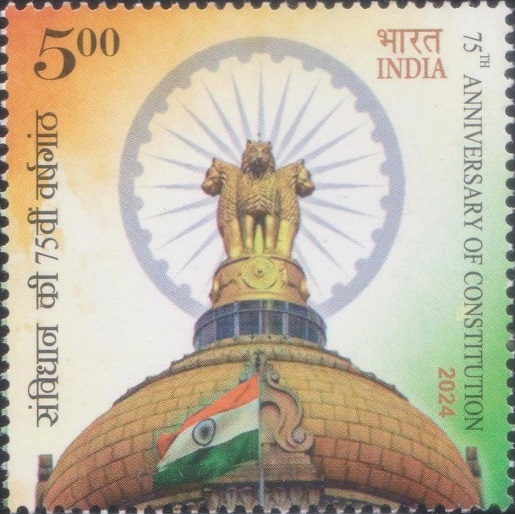
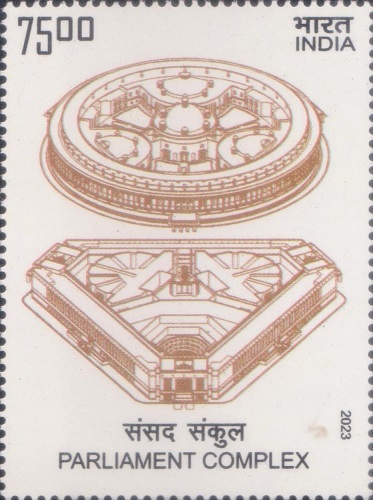
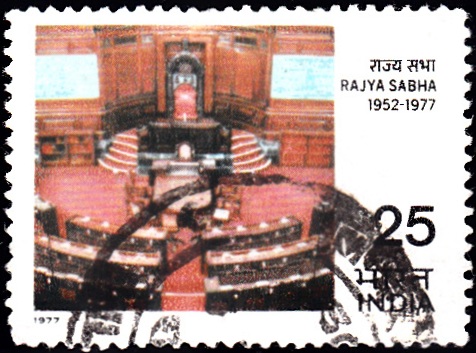
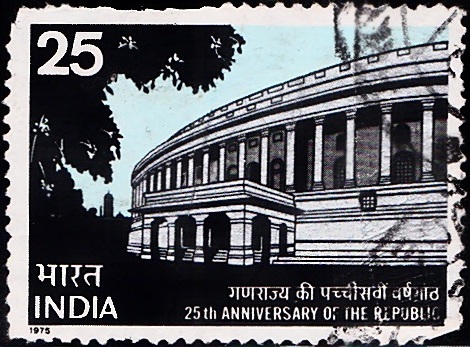
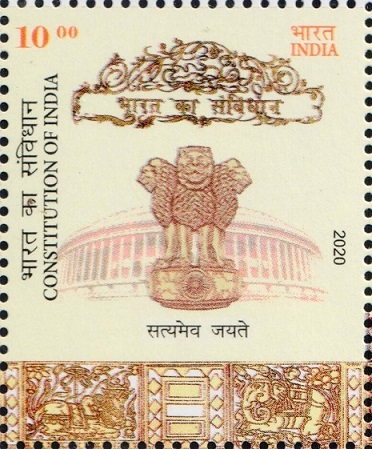
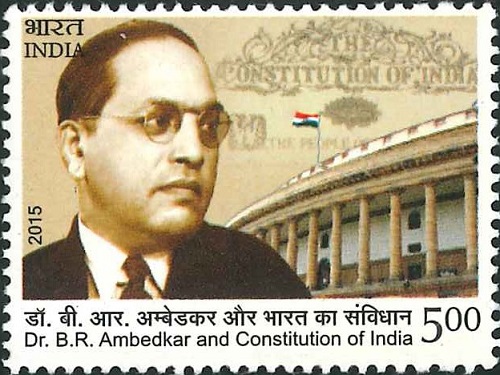
The visual story of the Constitution of India extends beyond the original illustrations of its manuscript. Over the decades, its ideals and historical moments have also been represented through commemorative stamps, issued to mark milestones related to the Constitution, the Republic, and the figures who shaped it. These stamps translate constitutional history into widely circulated visual symbols, bringing its legacy into everyday public life.
Together, the illustrated manuscript and the stamps released over the years reflect how the Constitution has been remembered, celebrated, and reimagined visually. They show that the Constitution lives not only in legal texts and institutions, but also in the cultural imagery through which the nation continues to engage with its founding ideals.


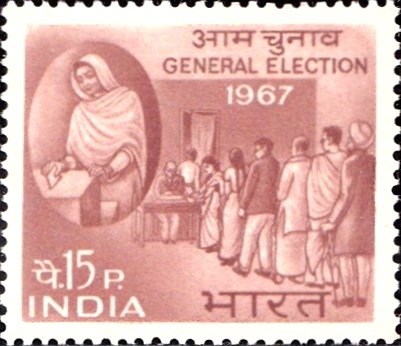
In India, postage stamps have long served as a public canvas through which the ideals of the Constitution are communicated to citizens. Issued by India Post, these small yet widely circulated objects translate constitutional principles into accessible visual symbols. Beginning with the 1950 “Inauguration of the Republic” series, stamps portrayed images such as the spinning wheel, agricultural labour, writing instruments, and celebrating crowds. Rather than focusing on formal state institutions, these early designs emphasised the role of ordinary citizens in shaping the Republic, visually expressing the constitutional principle of popular sovereignty and the belief that democracy rests in the participation and dignity of the people. As the Republic evolved, stamps increasingly reflected other constitutional ideals, particularly those relating to governance, rights, and social justice.
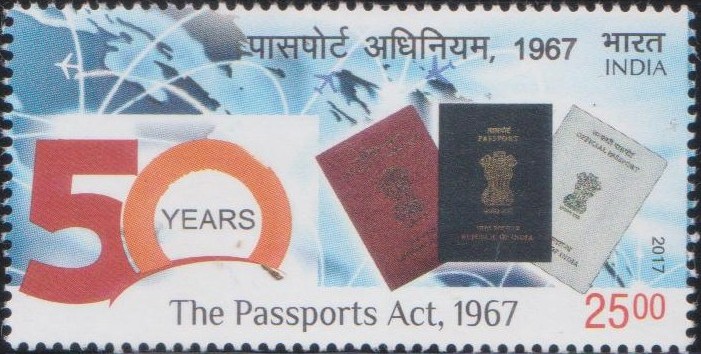
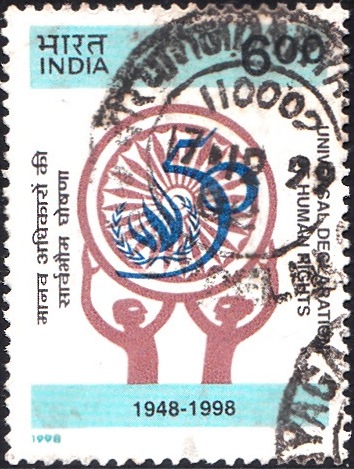
The 1962 Panchayati Raj stamp illustrated a village council gathered beneath a banyan tree, symbolising grassroots democracy and the decentralisation of power envisioned in the Directive Principles. The 1968 International Year of Human Rights stamp highlighted themes of dignity, equality, and universality, echoing constitutional protections such as equality before the law and the right to life. Later issues reinforced these commitments through themes like free legal aid, which drew attention to the constitutional goal of accessible justice. Commemorative stamps have also connected constitutional democracy to the struggles that shaped it, such as the 2017 Quit India Movement miniature sheet, while recent issues like the 2019 Child Rights stamps and the 2022 “Journey of the National Flag” stamp emphasise rights, citizenship, and national identity. These stamps reveal how constitutional ideals—sovereignty, democracy, equality, justice, and freedom—have been visually interpreted and communicated across generations.